













Microplastics are tiny fragments of plastic that can take more than 400 years to decompose fully. Because plastic waste breaks down very slowly, these small particles end up floating almost everywhere in the environment, including oceans, rivers, and coastal ecosystems. One place where microplastics are commonly found is mangrove forests. These forests are known for their dense, tangled roots that trap sediments and debris from the surrounding water. This also means that plastics and microplastics accumulate there over time.
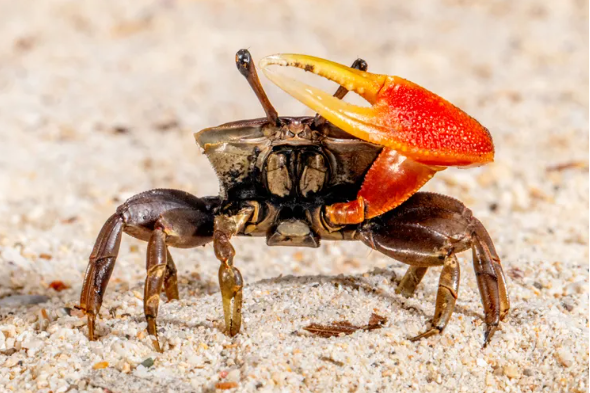
In the muddy sediments and roots of mangrove forests lives a small but important creature: the fiddler crab. These crabs play a key role in maintaining the health of mangrove ecosystems. They scoop up sediment and organic material while feeding, helping to clean and recycle nutrients in the environment. However, scientists have recently discovered that fiddler crabs may also be unintentionally changing how microplastics behave in these ecosystems.
Researchers from , the University of Exeter, and CEMarin conducted a study to get a better understanding of the relationship between fiddler crabs and microplastics in polluted mangrove forests. While it might seem helpful that these crabs interact with plastic particles, researchers warn that the process overall can actually make the pollution problem worse. According to the study, fiddler crabs consume plastic particles mixed in with the sediment and break them down into even smaller fragments during digestion.
These fragments can become extremely small, sometimes reaching the size of nano-plastics. Nano-plastics are far harder to detect and track than regular microplastics, which makes them more difficult for scientists to study or remove from the environment. Because they’re so tiny, they can also spread more easily through water and sediments, possibly entering the food chain at many different levels.
To investigate this process, the research team studied fiddler crabs living in a heavily polluted mangrove forest. The area they examined has some of the highest levels of plastic contamination ever recorded. During the experiment, the sediment in the study area was marked with fluorescent red and green polyethylene micro-spheres. These tiny plastic beads glow under special light, allowing researchers to track where the plastic particles move and accumulate.
The results showed that the fiddler crabs had accumulated microplastics at levels 13 times higher than the concentration found in the surrounding sediments. Scientists discovered plastic particles inside several parts of the crabs’ bodies, including their gills, organs, and hind guts. Even though the researchers were able to measure how much plastic the crabs consumed, they did not investigate whether the plastic caused harm to the crabs themselves.
Normally, plastic breaks down slowly over many years due to sunlight, waves, and other environmental factors. However, the feeding and digestive processes of fiddler crabs may accelerate this breakdown by turning microplastics into much smaller particles. While this might sound like a natural and positive solution to the micro-plastic pollution, it could actually create new environmental risks. Smaller plastic particles can spread more easily and are more likely to enter the bodies of other organisms.
Microplastics have already been found in many types of seafood that people regularly eat. Scientists are still studying the long-term effects of these particles on human health, but some studies suggest they may contribute to digestive issues, respiratory problems, and immune system disruptions.
Overall, the study shows an unexpected role that fiddler crabs play in the spread of plastic pollution. Even though these crabs help maintain healthy mangrove ecosystems, their feeding behavior also breaks down microplastics into even smaller and more widespread particles. This process could make plastic pollution even harder to detect and control, while increasing the chances that it may enter the food chain. As researchers continue to study microplastics and their effects, their findings emphasize the importance of reducing plastic waste at its source to protect both marine ecosystems and human health.