




Costco rotisserie chicken is one of the most famous, affordable, and popular items shoppers can buy at Costco, along with their well-known $1.50 hot dog sold at its food courts. The Kirkland Signature rotisserie chicken costs only $4.99, a price Costco has kept steady since 2009. Despite rising food and production costs over the years, the company has continued to sell the chicken at the same price, making it one of the most recognizable deals in retail.
During Costco’s January 2026 shareholder meeting, the company reported that it sold 157.4 million rotisserie chickens worldwide in the past year alone. This enormous number shows just how popular the product has become among Costco members. The chicken is often considered a convenient, ready-to-eat meal that can feed multiple people at a very low cost.
One reason Costco has been able to maintain such a low price is that the company is willing to do something many other supermarkets avoid: sell the product at a loss. In other words, Costco may lose money on each chicken it sells. However, the company expects that customers who come in to buy the cheap chicken will also purchase other items while they are in the store. In marketing, this strategy is called a “loss leader.” A loss leader is a product sold at little profit—or even at a loss—to attract customers and encourage them to buy additional goods. For Costco, this strategy has been extremely successful.
Although Costco’s rotisserie chicken has built a huge fan base over the years, its reputation is facing some challenges in 2026. The popular $4.99 poultry item is currently under scrutiny because of a class-action lawsuit filed this year. This lawsuit questioned how the chicken is produced and what ingredients are included in it.
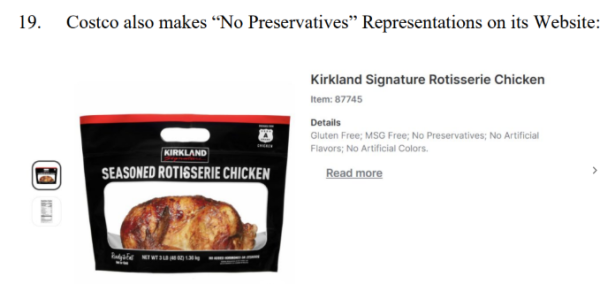
A lawsuit, filed on January 22 in the U.S. District Court, alleges that Costco misled shoppers by marketing its Kirkland Signature rotisserie chicken as having “no preservatives.” The lawsuit was filed by two California consumers who claim that the chicken actually contains sodium phosphate and carrageenan. Both ingredients can be used in food production to help preserve moisture, extend shelf life, and maintain texture.
According to the lawsuit, listing the chicken as having no preservatives contradicts Costco’s in-store signage and online product descriptions. After the claims surfaced, Costco reportedly removed references to “no preservatives” from both its signage and online listings for the rotisserie chicken.
Costco responded by stating that the two ingredients mentioned in the lawsuit are approved by the U.S. Food and Drug Administration (FDA) and are commonly used in food products. The company explained that sodium phosphate and carrageenan are added to help maintain the chicken’s moisture, texture, and overall consistency. Both ingredients are considered safe under federal regulations and fall under the category of “generally recognized as safe” (GRAS) when used within approved limits.
However, critics argue that even if the ingredients are approved, their presence may conflict with the company’s previous marketing claims about the product containing no preservatives. Because of this disagreement, the case will likely focus on whether Costco’s labeling and advertising were misleading to consumers.
Costco’s rotisserie chicken has long been one of the company’s most iconic products, known for its low price and convenience. By using a loss-leader strategy, Costco has successfully drawn millions of customers into its stores while maintaining the chicken’s $4.99 price for over a decade. However, the recent lawsuit highlights growing concerns about transparency in food labeling and ingredient disclosure. As the legal cases move forward, they may influence how companies advertise and label prepared foods in the future, potentially shaping consumer trust and industry standards.